


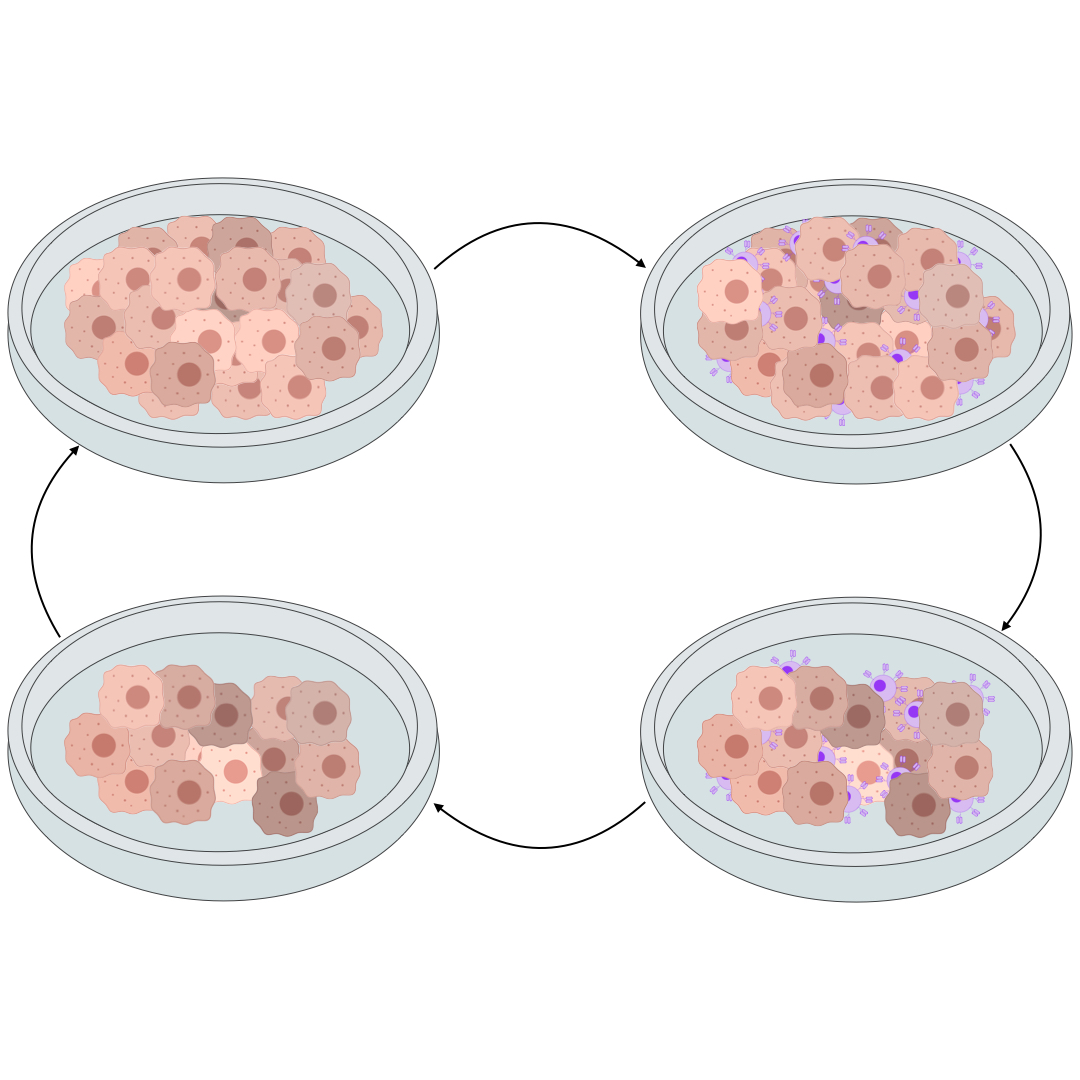
CD19-directed CAR-T therapies have transformed the treatment of relapsed or refractory B-cell malignancies. However, a substantial proportion of patients eventually relapse after infusion, with loss or alteration of the CD19 antigen representing an important mechanism of resistance. Although tisa-cel and axi-cel recognize the same FMC63 epitope of CD19, they differ in their hinge, transmembrane and costimulatory domains, which may influence their therapeutic activity and the development of resistance.
To determine whether the structural differences influence the development of resistance, the study directly compared CAR-T cells expressing constructs that reproduce the CAR architectures of tisa-cel and axi-cel. B-cell acute lymphoblastic leukemia and lymphoma cells were repeatedly exposed to 4-1BB-based or CD28-based CAR-T cells over 19 passages, allowing the evolution of resistance under sustained CAR-T-cell pressure to be studied.
The results showed that prolonged exposure to 4-1BB-based CAR-T cells led to the emergence of resistant tumor populations and to the loss of the FMC63 epitope recognized by the therapy. This resistance was associated with genetic alterations in CD19, including mutations, abnormal splicing and loss of heterozygosity. In contrast, CD28-based CAR-T cells did not induce the same pattern of complete resistance or the same genetic alterations. These findings were consistent across both leukemia and lymphoma models and reproduced alterations previously associated with acquired resistance in patients.
Mathematical simulations helped provide a mechanistic explanation for these differences. The lower cytotoxicity of 4-1BB-based CAR-T cells against tumor cells with low CD19 expression favored the expansion of this population, increasing the likelihood that resistant cells emerged and eventually dominated the tumor population.
Overall, the study shows that the CAR structure can play an important role in shaping the development of resistance during treatment. The findings suggest that improving CAR-T-cell recognition of tumor cells with low CD19 expression could help prevent the emergence of resistant clones and reduce relapse rates. The study also highlights relevant diagnostic implications, as antibodies commonly used to assess CD19 expression may recognize epitopes different from FMC63 and therefore may not accurately reflect the amount of antigen accessible to therapeutic CAR-T cells.
The full article is available at: https://doi.org/10.1038/s41375-026-03081-3

|

|

|

|

|